Highlights in history
Rebranding process

Where we started
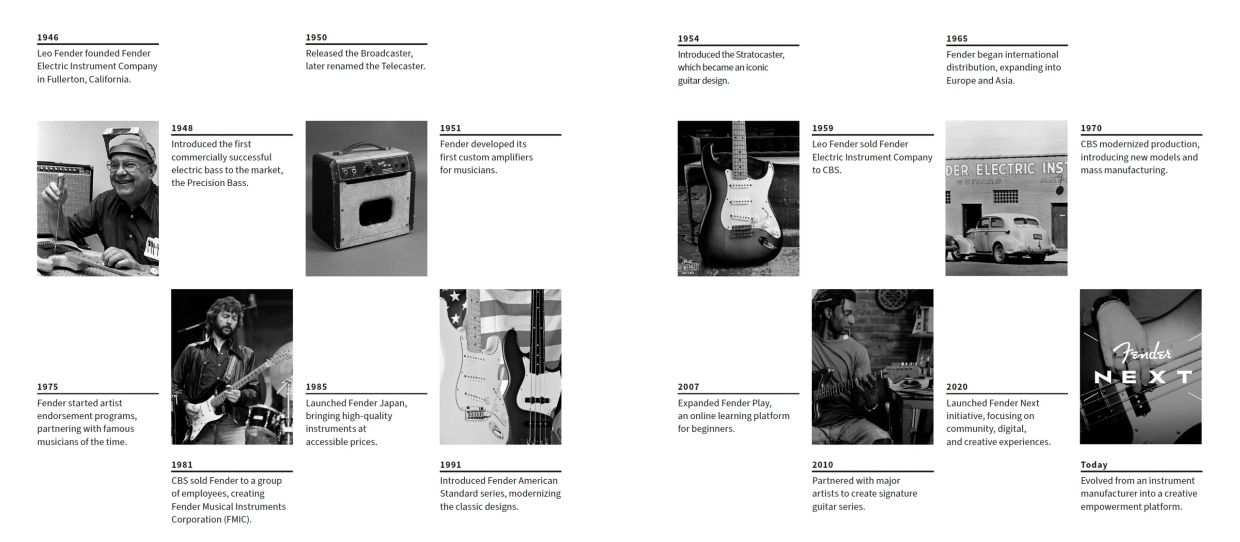
Fender’s story began with Leo Fender, a self-taught electronics enthusiast who believed music should be accessible to everyone. In the late 1940s, he designed instruments that were easy to play, repair, and afford, solving practical problems musicians faced.
Founded in 1946 in Fullerton, California, Fender quickly became a catalyst for a new sound, embracing experimentation over tradition. From garages to global stages, the brand grew from the belief that innovation and creativity should be within reach of anyone willing to pick up a guitar.
Where we went
Fender grew by listening to musicians and responding with practical innovation. In the 1950s, Leo Fender and his team introduced the Telecaster and Stratocaster—simple, modular designs that were easy to repair and adapt.
These guitars quickly reached working musicians, garage bands, and early rock ’n’ roll pioneers. Over time, Fender became a cultural icon, shaping genres and inspiring musicians across generations.
Where we are
Fender is still guided by the belief that music should be accessible, expressive, and personal. The Stratocaster, Telecaster, and Precision Bass remain at the heart of the brand, shaping music across genres and generations.
While staying true to craftsmanship and sound, Fender has evolved with technology and culture through Fender Play, artist collaborations, and community content. This approach honors its legacy while keeping the brand relevant for today’s creators.
New visual identity



Typography
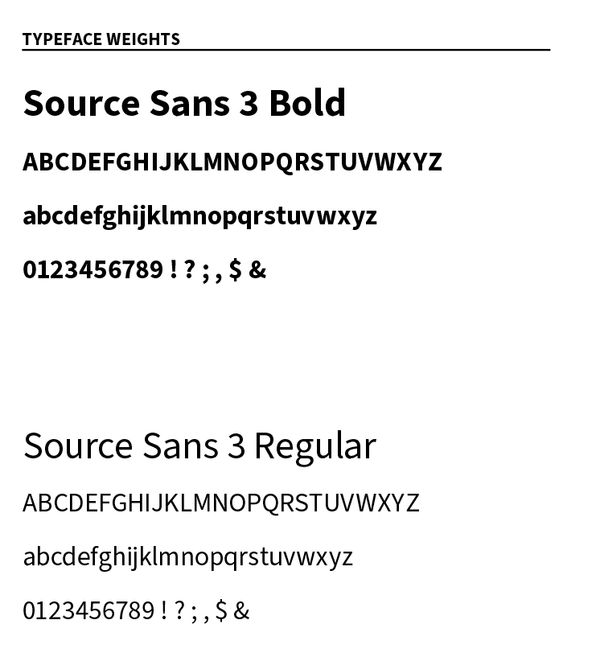
Source Sans 3 is a clean, modern sans-serif typeface that offers strong legibility and versatility across digital and print applications. Its simplicity and openness make it well-suited for Fender’s evolving identity, supporting clear communication while complementing the brand’s focus on accessibility and creative expression.
Key phrases

Sound as identity
This concept reframes Fender’s role from simply making instruments to enabling people to express who they are through music, positioning the rebrand around identity, cultural participation, and personal meaning rather than product heritage alone.
Sparks of imagination
The rebrand emphasizes creativity as an active process—encouraging experimentation, learning, and artistic discovery—shifting Fender from a performance-focused brand toward one that supports creation at every stage.
Circles of synergy
This idea guides the brand toward shared musical experiences, highlighting collaboration, education, and participation as central to Fender’s evolution into a platform that connects creators rather than serving individuals in isolation.
Brand chart
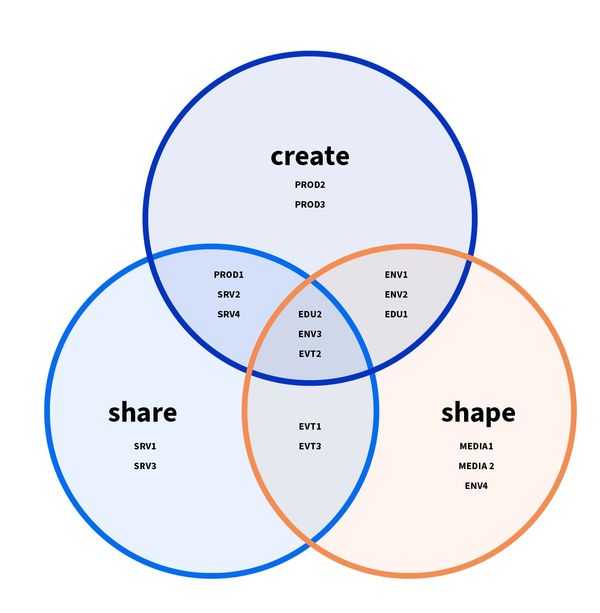
Experiences/ Environments
ENV1 – Fender First Note
ENV2 – Fender Sound Labs
ENV3 – Fender Studio Hubs
ENV4 – Fender Culture Labs
Services
SRV1 – Fender Circles
SRV2 – Fender Jam Club
SRV3 – Fender Track Exchange
SRV4 – Fender Collab Challenges
Products
PROD1 – Fender Flow
PROD2 – Fender Mod Kits
PROD3 – Fender Creator Kit
Educational
EDU1 – Fender Open Source Music School
EDU2 – Fender Masterclass Series
Events
EVT1 – Fender Culture Sessions
EVT2 – Fender Pop-Up Sounds Labs
EVT3 – Fender Open Mic Network
Media
MEDIA1 – Fender Signal
MEDIA2 – Fender Archive